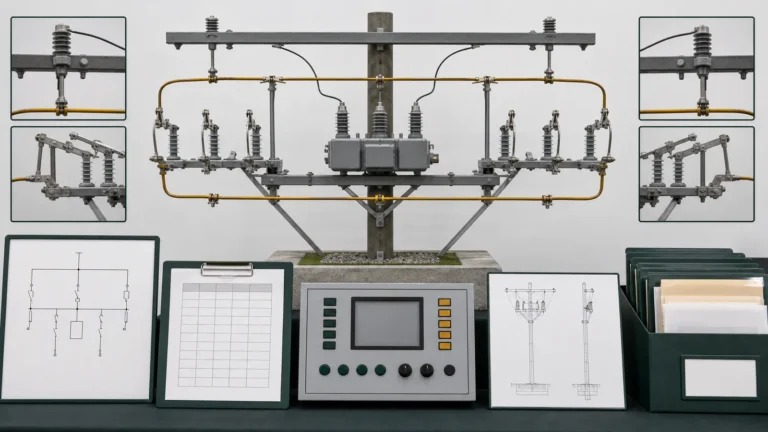
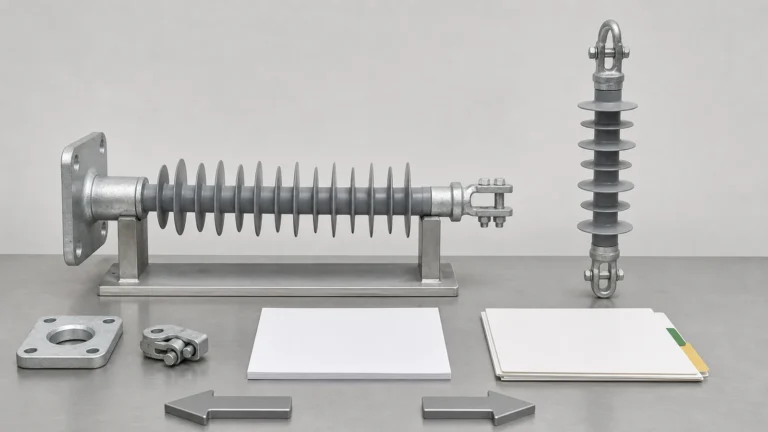
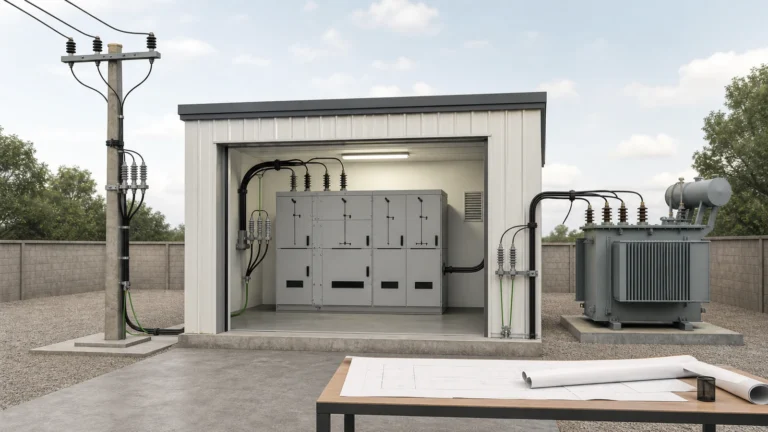
Quotation form
Send an inquiry
Start with the basics. Our team can follow up for missing drawings, standards or packing details.
Submitted details are used only for quotation, technical review and project communication.


A quotation-ready high-voltage equipment RFQ defines what the equipment must do, where and how it will operate, which electrical and mechanical interfaces it must match, what documents and tests are required, and which commercial and logistics assumptions apply. It lets the manufacturer separate confirmed requirements from supplier proposals, options, deviations, and open questions.
A product name plus voltage and current is only a starting inquiry. It does not define fault duty, insulation level, switching function, system arrangement, protection interfaces, service environment, destination requirements, inspection scope, documentation, packing, or delivery basis. Missing data forces every bidder to state assumptions, making quotations difficult to compare.
Before requesting a formal quotation, prepare or assign the following project inputs. This short list does not replace the full technical schedule below.
Download the editable high-voltage equipment RFQ checklist (Excel) to collect buyer inputs and compare supplier responses on a common basis.
| Data Area | Minimum Inquiry | Quotation-Ready RFQ |
|---|---|---|
| Equipment | General product name | Equipment category, application point, duty, and supply boundary |
| Electrical | Nominal voltage and current | System/rated voltage, current, frequency, fault duty, insulation data, and switching duty |
| Interfaces | No drawing | SLD, conductor/cable, mounting, control, protection, and communication interfaces |
| Compliance | Standard product |
Applicable standard and edition, destination/owner requirements, and required evidence |
| Commercial | Quantity and country | Quantity, options, spares, schedule, packing, Incoterm, named port/address, and approvals |
| Symptom | First Test | Likely Cause | Next Action |
|---|---|---|---|
| Supplier quotations cannot be compared line by line | Build a scope matrix for equipment, accessories, tests, documents, packing, and freight | Each bidder used different assumptions or exclusions | Reissue or clarify the RFQ with a common response schedule |
| Manufacturer asks for the SLD before confirming a model | Check whether the duty and connection point are defined | Feeder role, bus arrangement, cable entry, protection interface, or supply boundary is open | Attach the SLD or mark the relevant interface as supplier to propose with constraints |
| A quoted model meets voltage/current but not the project | Compare fault duty, insulation, environment, interfaces, and standard edition | Model was chosen before the complete duty was defined | Return the item as a deviation and request a compliant proposal |
| Inspection and document costs appear as later options | Review the original document and ITP sections | Test reports, witness points, certificates, or drawings were not included in the quotation basis | Add a named deliverables register and inspection schedule |
| Freight and packing scope remain unclear | Check Incoterm, named place/port, package type, dimensions, and handling limits | Commercial delivery basis is incomplete | Confirm the logistics block before commercial comparison or award |

Not every value is available at the first RFQ issue. The correct response is to label its state instead of guessing:
These states should appear in the requirement schedule and the supplier’s compliance matrix. A blank cell is not a decision.
Start with the equipment’s role in the power system. The XIYA POWER product directory routes inquiries among line switching, switchgear components, complete cabinets, smart-grid equipment, and custom manufacturing before a model is chosen.
State the connection point, switching/protection/isolation duty, normal operating sequence, upstream and downstream equipment, and whether the supply includes equipment only, structures, mechanisms, relays/controllers, accessories, loose parts, field cables, engineering, tests, training, or supervision.
For line and substation devices, the distribution switching equipment group helps distinguish disconnecting, load switching, fused switching, earthing, and circuit-breaking duties. Similar voltage ratings do not make those functions interchangeable.
Provide system nominal and maximum voltage, equipment rated voltage, frequency, continuous current, short-circuit breaking/making/withstand duty with duration where relevant, insulation level, grounding method, load or switching duty, and any required operating sequence.
Separate system values from equipment ratings and identify the source: utility data, fault study, load schedule, protection study, or project specification. If the fault level is pending, state that it is open and provide the review milestone rather than selecting a convenient standard rating.
IEC 62271-1:2017 applies common specifications to AC switchgear and controlgear above 1 kV within its published scope. It is not the only equipment-specific or destination requirement. Name the applicable product standard, edition, local rules, and owner specification in the RFQ.
The SLD shows system role, feeder/bus arrangement, normally open points, earthing, metering, CT/PT locations, protection zones, and interfaces with other packages. Add conductor or cable type, number, size, termination standard, terminal orientation, busbar interface, phase spacing, cable-entry direction, mounting points, earthing terminals, and available installation clearances.
For a lineup, include bay sequence, feeder schedule, bus-section/coupler duties, cable trench, room access, transport splits, and extension interfaces. The complete switchgear cabinet range uses the SLD, bay functions, ratings, protection package, room layout, cable entry, and document requirements to determine the configuration.
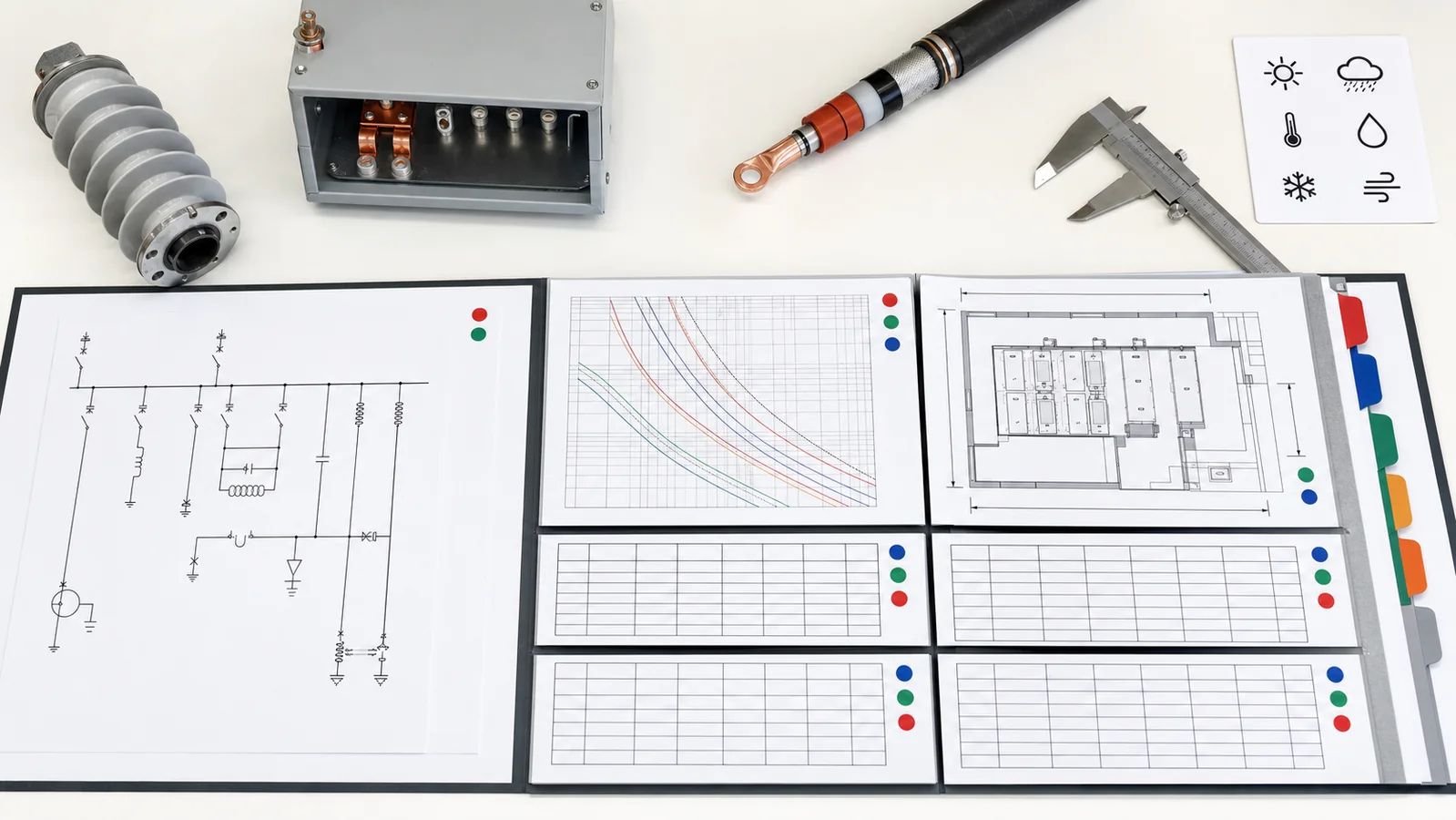
State CT/PT data, relay/controller functions, setting responsibility, auxiliary and control voltages, trip/close circuits, interlocks, local/remote philosophy, alarms, indications, meters, terminal requirements, communication protocol, point list, addresses, time synchronization, remote-command authority, and cybersecurity requirements where applicable.
Do not write only SCADA compatible. Identify the physical interface, protocol, data points, command permissions, gateway boundary, and test responsibility. If the supplier proposes the relay or controller, require the proposed model, supported functions, I/O capacity, communication options, and deviations.
Provide indoor/outdoor location, altitude, ambient range, humidity, pollution or contamination conditions, coastal/corrosive exposure, seismic/wind/ice requirements where applicable, enclosure/IP requirement, foundation or pole layout, access/maintenance clearances, lifting limits, transport restrictions, finish/color, cable approach, and earthing arrangement.
Replacement inquiries also need old-part photographs, nameplates, controlled drawings, measured interface dimensions, mechanism orientation, and any known site modifications. Mark measurements as site inputs, not as manufacturer-approved tolerances.
List applicable standards and editions, destination-market documents, drawing formats, language, review stages, datasheets, calculations, manuals, certificates, type/design evidence, routine-test reports, inspection records, test reports, FAT/SAT requirements, witness and hold points, calibration evidence, final as-built documents, and data-book format.
Define who approves each document and whether approval is required before purchasing material, starting production, testing, packing, or shipment. Certificates as standard is too vague for a contract deliverable.
The XIYA POWER OEM/ODM workflow asks buyers to confirm drawings or samples, labels/nameplates, inspection expectations, document requirements, packing, destination, and production-release inputs.
Specify logo files and permissions, nameplate data/language, warning labels, paint/finish, accessories, special tools, commissioning spares, operating spares, accessory-pack contents, quantity per package, carton/crate/pallet requirements, moisture/corrosion protection, lifting points, shipping marks, and handling/storage constraints. Require label and packing approvals where mistakes would affect release.
State base quantity, optional quantity, samples/prototypes, spare quantities, requested delivery milestone, required drawing turnaround, buyer review duration, inspection notice, packing completion, destination, named port/address, Incoterm and edition, partial-shipment rules, and required shipping documents.
Keep requested dates separate from supplier-confirmed dates. A quotation should state its schedule assumptions, exclusions, validity, payment basis, warranty boundary, and change-control method without hiding technical open items inside commercial notes.
This comparison is fictional. It is not a XIYA POWER quotation, real buyer inquiry, order, response-time result, price comparison, or commercial outcome.
Inquiry A requests four 12 kV, 630 A indoor vacuum circuit breakers and names a destination. It does not provide the system voltage, fault duty, operating sequence, breaker/cabinet interface, control voltage, CT/relay relationship, standard edition, FAT scope, packing, or trade term. A bidder can only respond with assumptions or a clarification list.
Inquiry B keeps the same quantity and headline rating but adds the 11 kV system data, a fictional 20 kA for 1 s study value, 50 Hz frequency, approved operating duty, SLD, cabinet interface drawing, bottom cable arrangement, auxiliary voltage, relay interface, required document list, FAT witness point, English/Arabic nameplate requirement, individual moisture-protected crates, and CIF named destination port. Every number is explicitly an illustrative RFQ input, not a recommended universal rating.
Inquiry B does not guarantee a compliant quotation, but it lets each manufacturer respond to the same requirement set. The bid review can then identify confirmed items, supplier proposals, options, deviations, and open data instead of comparing hidden assumptions.
| Requirement Area | Tool or Evidence | Acceptance Source | Result Handling |
|---|---|---|---|
| Rating and insulation basis | Data sheet, calculation, and approved standard schedule | Project specification and applicable product standard | Record proposal or deviation before technical acceptance |
| Main current path | Contact resistance test record where specified | OEM manual, approved procedure, and project specification | Require corrective action and retest for an out-of-limit result |
| Insulation condition | Approved insulation test method and test record | Applicable procedure, standard, and project specification | Capture circuit state, instrument, result, and disposition |
| Mechanical/interface fit | Drawings, sample, calibrated dimensions, and layout | Approved drawing and interface schedule | Keep unresolved dimensions open; do not release production |
| Protection/control | Setting responsibility, schematic, I/O list, and functional evidence | Approved control philosophy and OEM manual | Log clarifications, configuration changes, and test record revisions |
| Documentation/inspection | Deliverables register and ITP | Contract document list and agreed milestones | Assign owner, due date, and corrective action for missing evidence |
Require every bidder to return the same matrix:
| Response | Meaning | Buyer Review |
|---|---|---|
| Confirmed | Requirement accepted as written | Carry into the evaluated base scope |
| Proposed | Supplier solution for an open/proposal item | Review technical basis and interfaces |
| Option | Separately selectable scope | Compare price, schedule, and technical effect |
| Deviation | Requirement not met as written | Accept formally, request an alternative, or reject |
| Open | Cannot confirm until named input is supplied | Assign input owner and resolution milestone |

Before award, normalize the quotations for equipment scope, ratings, accessories, documents, tests, packing, freight, schedule assumptions, and exclusions. Before production release, close the drawings, labels, ITP, packing, and required technical open items. Preserve the approved compliance matrix as part of the order baseline.
Provide the equipment category and duty, voltage/current/fault data, applicable standard and edition, supply boundary, key interfaces or SLD, quantity, destination, trade basis, and required documents/tests. The manufacturer may still need project-specific clarification.
Voltage terminology and regulatory scope vary by market, owner, and equipment category. State the actual system and rated voltage plus the applicable standard and destination requirements rather than relying on the label alone.
A model can provide a comparison baseline, but duty and interfaces should come first. Require the bidder to confirm compliance or identify a proposed alternative/deviation.
Include them in the RFQ so test scope, witness points, reports, calibration evidence, notice periods, and release documents form part of the quotation and order baseline.
A deviation states that the offered solution does not meet a defined requirement. An open item cannot yet be confirmed because required data or approval is missing. Both need written resolution before the affected release milestone.
A strong RFQ does not attempt to design every component for the manufacturer. It defines the duty, boundaries, interfaces, evidence, options, and commercial basis clearly enough for the manufacturer to propose a solution without hiding assumptions. Release the RFQ when each critical field is confirmed, deliberately assigned to the supplier, or recorded as an owned open item with a resolution milestone.